
In my 20+ years of business experience, I’ve worked with a huge range of marketing departments and agencies. We all know that the core of functional marketing is communication. But the real trick is figuring out how to actually open those lines of communication. For established companies, this might be easy, until you want to speak to new people, of course. For startups, especially those with large numbers of competitors, it is much, much harder. But the end goal for all companies, new or established, large or small, is to get a product or service in front of people. And where do people look for products and services? On the internet.
Social media is an avenue that many businesses successfully utilise to market themselves. It’s a fantastic option for many people. But it’s also one built on shaky ground. It’s entirely possible that you could, in response to some seemingly innocuous post, have your account suspended or deleted. That would result in the loss of all contacts and enquiries that had remained on-platform. Alternatively, your social media channel of choice could be taken over by an autocratic billionaire with a penchant for glorifying fascist ideologies. Stranger things have happened.
With that in mind, it’s probably important to focus on the one place online of which you have complete control: Your website. But how do you get people to visit your website? A brand-new website is hardly going to jump, on day one, to the top of the Google search pages. Unless you have a healthy Ads budget, I suppose. The answer lies in that murky world of Search Engine Optimisation.
What is Search Engine Optimisation
Now this is the funny thing. I’ve heard many descriptions of SEO from many different sources. Some of whom I have been paying a hefty sum. But it wasn’t until I spoke to a freelance SEO consultant that the truth of the matter really hit home. Search engines aren’t a quality engine; they’re a recommendation engine.
Let’s say I’ve just formed my new startup. We’ve had a brilliant new website built that tells potential customers everything they need to know about our product. We’ve optimised all the calls to action on the site. It loads quickly and is built with accessibility in mind. Blah, blah, blah. The marketplace for that product is healthy, but not crowded. Great, we’ve got our niche and our landing spot. What now?
A lot of SEO agencies (in fact, nearly every single one I’ve ever met with) will tell you to improve your content. Use the right keywords. Optimise your H1 tags. Sort out your meta titles and meta descriptions. That’s all good advice for establishing the content structure of your site. But how does that help Google to find you? It doesn’t.
What this one guy described to me – that so many had failed to do – was that far more than content, what matters is recommendations. And those recommendations come in the form of links. And building links is where the bulk of SEO actually lies.
SEO proof
But why do I believe this one guy when every other SEO agency has told me something different? Let’s look at a couple of examples, shall we? Open up another tab and type in… I don’t know… Rolling Stones. Or Oasis. Or Billie Eilish. It doesn’t really matter, but pick your favourite high-profile music artist. What do you see as the top organic search result on Google (ignore ads)?
That’s right. Wikipedia.
But which website do you think offers that ultimate authority on each of those artists? Probably their own website, right? But how many links exist to the Rolling Stones website? And how many to Wikipedia? It’s not even going to be close, is it?
But maybe you think that Wikipedia offers better content than those websites. So let’s look at something a bit different. Try typing in Oxford University. What’s number one on there? That’s right, it’s our old friend Wikipedia again.
Batman? Wikipedia.
Astrophotography? Wikipedia.
Shopping Cart? Wikipedia.
Jamaican Jerk Chicken? Wikipedia.
Does Wikipedia offer the best content for all of those things? Does it fuck. But it’s probably the most linked-to website on the internet. So it ranks for nearly everything.
How to actually do SEO
So my new best friend, the SEO consultant, taught me something incredibly valuable. You need to build links in order to rank your website. But it’s hard. A link from another new website means nothing. Websites have to be established and also be linked to from other websites. It’s called authority, apparently. A link from a website that is linked to by other websites that, in turn, are linked by more websites, passes on authority. It’s a popularity contest.
If a popular kid starts hanging out with you at school, what happens? More popular kids will start to hang out with you too. And soon, you yourself will become a popular kid. Easy. But if you don’t know any of the popular kids, you’re bang out of luck. Which is where an actual SEO expert comes in.
When I started working with this new SEO consultant (who I have now worked with multiple times, in a bunch of different businesses), he started working on building links. And it worked.
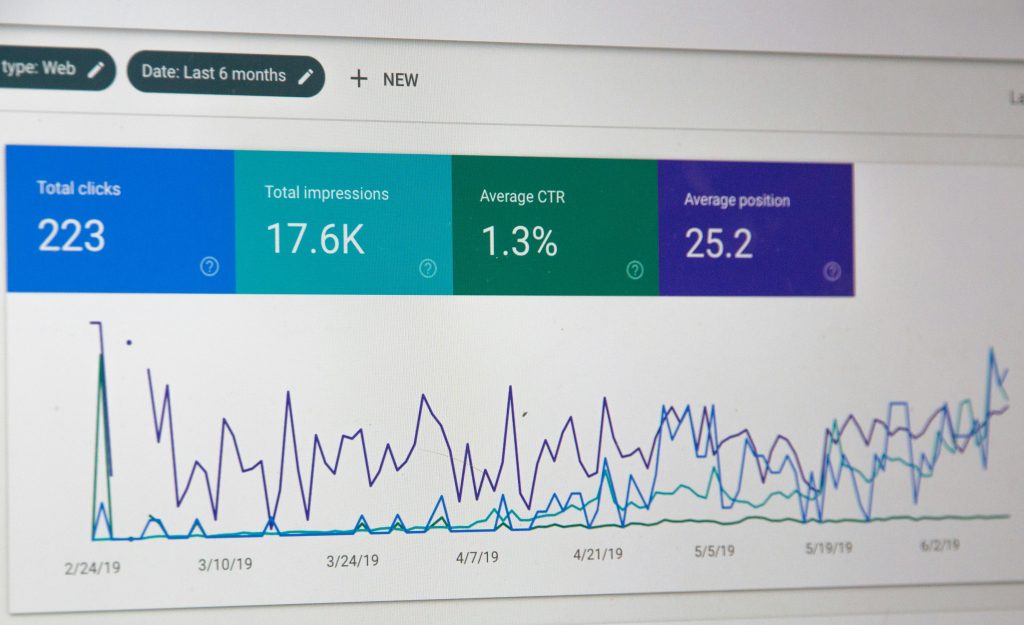
I can’t go into too much detail, because he’s the expert, not me. But I have seen a remarkable improvement in search engine presence since binning off those cookie-cutter agencies. They give lovely monthly reports and talk a good game. But are they actually doing anything other than tinkering and collecting a cheque? Not in my experience.
The way he puts it, all of that H1, meta description, keyword stuff is important. But it’s still no use if no one can find your website. And if all that your SEO agency does is fuck around with content, they’re almost certainly ripping you off.